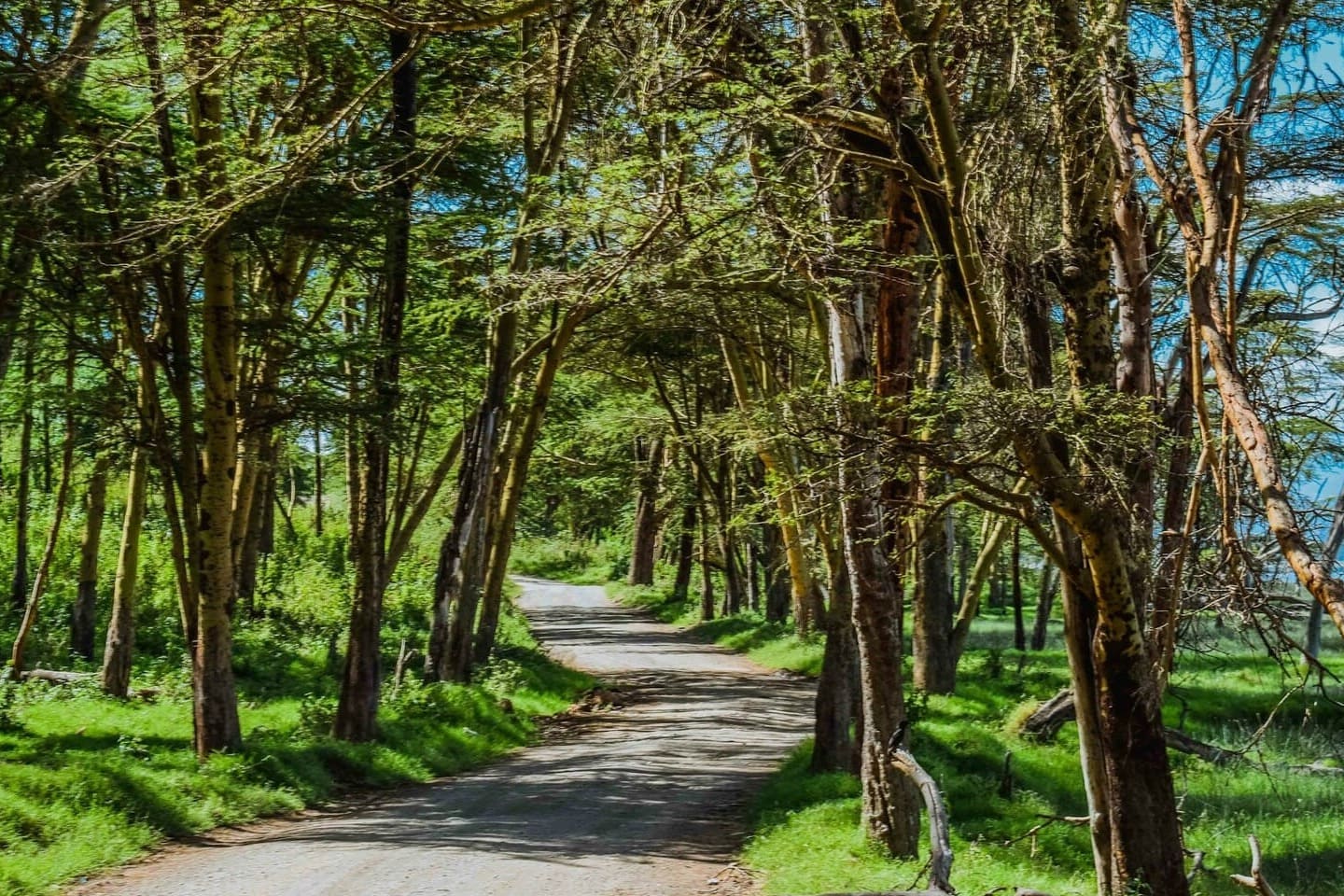
Carbon Offsetting and the Chyulu Hills
The Chyulu Hills REDD+ Project is a leading carbon offset initiative that safeguards over 410,000 hectares of forests and rangelands, acting as a vital carbon sink. By preventing deforestation and promoting sustainable land use, the project enhances carbon sequestration, protects biodiversity, and supports local communities that depend on these ecosystems for their livelihoods.
Through the prevention of stored carbon release, the Chyulu Hills REDD+ Project plays a crucial role in climate action. Businesses and individuals can support this initiative by purchasing carbon credits, making a measurable impact in the fight against climate change while fostering conservation-driven economic opportunities
Project methodology
The Chyulu Hills REDD+ project has a crediting period spanning from September 19, 2013, to September 18, 2043. Initially certified under Verra Methodology VM0009 (VCS) for Avoided Ecosystem Conversion, the project quantified net GHG emission reductions and removals by preventing forest conversion. To enhance alignment with the Paris Agreement and Nationally Determined Contributions (NDCs) introduced in 2020, the project is updating to VM0048 (VCS), which employs regional, jurisdictional baselines. This new methodology mandates the use of jurisdictional activity data and a third-party-developed deforestation risk map for credit allocation. Carbon stocks and leakage are monitored using plot-based sampling and remote sensing, with over 400 permanent leakage and biomass inventory plots surveyed at least every five years. Remote sensing detects major disturbances beyond these plots, and forests and grasslands are regularly assessed for encroachment and fire. To safeguard carbon integrity, the project contributes credits to the Verra pooled buffer account, an "insurance policy" that covers risks like fire. The VCS AFOLU Tool for Non-Permanence Risk and Buffer Determination is used to assess risks from natural, economic, and management sources, with buffer credit allocations typically ranging between 10-15% annually.